

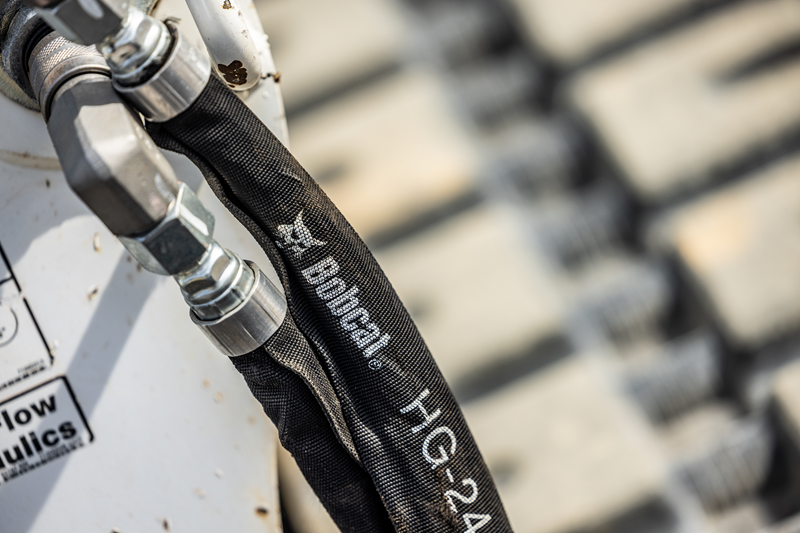
How to Check & Service Hydraulic / Hydrostatic Fluid on a Bobcat S650
The hydraulic and hydrostatic systems on a Bobcat S650 are responsible for lift, tilt, auxiliary function, and drive performance. If the fluid is low, dirty, overheated, contaminated, or restricted by old filters, the machine can develop weak hydraulics, noisy operation, slow response, overheating, drive issues, warning lights, and expensive component damage. Hydraulic fluid changes are critical to keeping your Bobcat working for you at peak performance.
This is not the system to “top up and hope.” Hydraulic problems usually get more expensive the longer the machine keeps working. If your S650 is losing hydraulic fluid, running hot, moving slowly, making new hydraulic noise, or showing a warning, the smart move is to inspect it early.
For owners and operators, this guide explains what to check, when service is due, what symptoms matter, and when to contact Chinook Equipment for the correct Bobcat parts or service support.
Quick Job Overview
- Machine: Bobcat S650 skid-steer loader
- System: Hydraulic / hydrostatic system
- Basic check difficulty: Beginner
- Full service difficulty: Intermediate to advanced
- Best for: Routine service, hydraulic warning checks, low-fluid concerns, overheating, slow hydraulics, and filter replacement planning
- Have ready: Model, serial number, current hours, warning codes, visible leaks, and a description of symptoms before ordering parts or booking service
Bobcat S650 Hydraulic Service Intervals
The Bobcat S650 hydraulic fluid level should be checked every 10 hours or daily. Hydraulic hoses and tubelines should be inspected every 50 hours. The hydraulic charge filter and hydraulic reservoir breather cap are 500-hour or 12-month service items. The hydraulic/hydrostatic filter and hydraulic reservoir fluid are 1000-hour or 12-month service items.
That means hydraulic maintenance is not one single job. It includes level checks, hose inspections, correct filter replacement, breather cap replacement, proper fluid selection, and contamination control. Skipping one of those items can shorten the life of the hydraulic and hydrostatic system.
| Service Item | Interval | Why It Matters |
|---|---|---|
| Hydraulic / hydrostatic fluid level | Every 10 hours or daily | Low fluid can cause slow function, heat, noise, and system damage. |
| Hydraulic hoses and tubelines | Every 50 hours | Damaged hoses, leaks, or loose fittings can create safety and downtime risks. |
| Hydraulic charge filter | Every 500 hours or 12 months | Protects the charge circuit and helps reduce contamination-related failures. |
| Hydraulic reservoir breather cap | Every 500 hours or 12 months | Helps keep the reservoir venting properly while reducing contamination entry. |
| Hydraulic / hydrostatic filter | Every 1000 hours or 12 months | Protects hydraulic and hydrostatic components from contamination. |
| Hydraulic reservoir fluid | Every 1000 hours or 12 months | Old or contaminated fluid increases wear and can reduce system performance. |
If you do not know the machine’s maintenance history, do not assume it is current. Filters and fluids are cheaper than hydraulic pumps, motors, valves, and downtime.
Bobcat S650 Hydraulic Capacity
The Bobcat S650 hydraulic/hydrostatic reservoir capacity is 10.2 L / 2.7 U.S. gal. The total hydraulic/hydrostatic system capacity is 45.0 L / 11.9 U.S. gal.
That difference matters. Draining the reservoir is not the same as removing every litre of fluid from the entire hydraulic and hydrostatic system. If the machine has contaminated oil, metal debris, water contamination, overheating, or a major component failure, treat it as a system contamination issue, not just a simple drain and refill.
How to Check Hydraulic Fluid Level on a Bobcat S650
Checking the hydraulic fluid level is a basic maintenance step, but it still needs to be done correctly.
- Park the loader on level ground.
- Lower the lift arms completely.
- Place the attachment flat on the ground.
- If no attachment is installed, tilt the Bob-Tach fully back.
- Stop the engine and remove the key.
- Check the hydraulic/hydrostatic sight gauge.
- If fluid is low, clean around the fill area before removing the cap.
- Add only the correct hydraulic/hydrostatic fluid.
- Reinstall the cap and inspect for leaks.
A low hydraulic fluid level should not be treated as normal. Hydraulic systems do not consume fluid like fuel. If the level keeps dropping, the machine likely has a leak that needs to be found.
What Hydraulic Fluid Should You Use?
Use the correct Bobcat hydraulic/hydrostatic fluid or a fluid that meets the required viscosity grade and viscosity index for the machine and operating temperature. The S650 service information specifically warns not to use automatic transmission fluid in the loader because permanent transmission damage can result.
This matters in Alberta conditions. Machines may see cold starts, heavy dust, mud, long idle periods, seasonal temperature swings, and heavy attachment use. The wrong fluid can create slow cold-weather response, overheating, increased wear, drive concerns, and unnecessary hydraulic system damage.
If you are not sure what fluid is in the machine now, do not blindly mix fluids. Get help identifying the correct next step.
Warning Signs of Hydraulic or Hydrostatic Problems
Many S650 hydraulic problems show up as performance complaints before they become full failures. The sooner you catch them, the better.
| Symptom | Possible Cause | Recommended Next Step |
|---|---|---|
| Slow lift or tilt | Low fluid, restricted filter, air, pump issue, or valve issue | Check fluid level and inspect for leaks. Book service if unresolved. |
| Hydraulic noise | Low fluid, air in system, restriction, or component wear | Stop and inspect before continuing to operate. |
| Hydraulic overheating | Low fluid, restricted cooler, wrong fluid, heavy load, or system issue | Clean cooling areas, check level, and schedule diagnosis. |
| Milky hydraulic oil | Water contamination | Stop running the machine and book service. |
| Burnt-smelling fluid | Overheated or degraded fluid | Inspect the system and replace fluid/filters as required. |
| Repeated low fluid | External leak or internal issue | Do not keep topping up. Find the cause. |
| Drive or steering concern | Hydrostatic fluid level, calibration, cooler restriction, or component issue | Book diagnosis before running the machine harder. |
The S650 service information also lists incorrect hydrostatic fluid level and oil cooler restriction as possible causes when the hydrostatic system is overheating. That is why level checks and cooler cleaning should not be skipped.
Hydraulic Leak Safety
Hydraulic leaks can be dangerous. Fluid under pressure can penetrate skin or eyes, and pressure leaks may not be visible. Do not use your bare hand to search for leaks. Use cardboard or wood and wear eye protection.
If hydraulic fluid enters skin or eyes, get immediate medical attention. Do not treat it like a normal cut or splash.
Basic Hydraulic Fluid Service Overview
A basic hydraulic reservoir fluid and filter service generally follows this sequence. Always follow the correct service procedure for your serial number and machine configuration.
- Park safely on level ground.
- Lower the lift arms and attachment fully.
- Stop the engine and remove the key.
- Clean around the hydraulic fill, filter, breather, and drain areas.
- Drain fluid into a clean, suitable container.
- Replace required filters at the correct interval.
- Replace the hydraulic reservoir breather cap when due.
- Refill with the correct hydraulic/hydrostatic fluid.
- Start the machine and operate hydraulic functions carefully.
- Shut down, inspect for leaks, and recheck the fluid level.
Do not replace hydraulic fluid while leaving contaminated filters in place. Do not open hydraulic components in dirty conditions. Do not use the wrong fluid because it happens to be nearby in the shop.
Parts and Supplies You May Need
- Correct Bobcat hydraulic/hydrostatic fluid
- Hydraulic / hydrostatic filter
- Hydraulic charge filter
- Hydraulic reservoir breather cap
- Clean drain container
- Clean rags or absorbent pads
- Gloves and eye protection
- Machine serial number for correct parts matching
- Current machine hours to confirm what service is due
For faster parts help, provide Chinook Equipment with the machine model, serial number, current hours, and the reason for service. If there is a leak or warning light, include a photo or short description of what you are seeing.
When This Is Not a DIY Repair
Checking hydraulic fluid level is basic owner maintenance. Full hydraulic diagnosis is different. If the machine has hydraulic noise, overheating, slow lift, weak tilt, drive hesitation, repeated low fluid, visible leaks, milky fluid, burnt-smelling fluid, warning codes, or metal contamination, book service.
Running a hydraulic system while it is low, contaminated, overheating, or leaking can damage pumps, motors, valves, cylinders, hoses, and hydrostatic components. That is not a place to save money by guessing.
Why Work With Chinook Equipment for Bobcat S650 Hydraulic Service?
Hydraulic service depends on the correct parts, correct fluid, clean work, and accurate diagnosis. Chinook Equipment supports Bobcat owners with parts, service, rentals, and equipment support across multiple Alberta locations. Order parts or book service on Chinook’s Parts & Service page, we make it easy to start with the right information.
- Bobcat parts support by model and serial number
- Hydraulic filters, charge filters, breather caps, and fluid support
- Service appointment requests available online
- Support for leaks, overheating, warning lights, and performance complaints
- Alberta locations listed in Lethbridge County, Nisku, and Pincher Creek
Bobcat S650 Hydraulic Fluid FAQ
How often should I check Bobcat S650 hydraulic fluid?
Check the hydraulic/hydrostatic fluid level every 10 hours or daily before operation. If the fluid level keeps dropping, inspect for leaks instead of repeatedly topping it up.
How often should I replace Bobcat S650 hydraulic filters?
The hydraulic charge filter and hydraulic reservoir breather cap are replaced every 500 hours or 12 months. The hydraulic/hydrostatic filter is replaced every 1000 hours or 12 months.
How often should Bobcat S650 hydraulic fluid be changed?
The hydraulic reservoir fluid is replaced every 1000 hours or 12 months. Fluid should also be replaced if contaminated or after major hydraulic repair.
Can I use regular hydraulic oil in a Bobcat S650?
You MUST use the correct Bobcat hydraulic/hydrostatic fluid not using the manufacturer required fluid can cause serious damage to hydraulic and related components. Do not use automatic transmission fluid, motor oil, or other types of lubricants.
Why does my Bobcat S650 hydraulic fluid keep getting low?
Repeated low fluid usually means there is a leak. Hydraulic systems should not need constant top-ups. Inspect the machine and book service if the cause is not obvious.
What does milky hydraulic oil mean?
Milky hydraulic oil usually indicates water contamination. Stop running the machine and have the system inspected before more damage occurs.
What should I tell Chinook Equipment when ordering hydraulic parts?
Provide the machine model, serial number, current hours, the parts you need, and any symptoms such as leaks, overheating, warning lights, or slow hydraulic function.
Related Bobcat S650 Maintenance Topics
- How to change engine oil and filter on a Bobcat S650
- How to replace the fuel filter and prime the fuel system on a Bobcat S650
- Bobcat S650 hard-start troubleshooting
- Bobcat S650 service schedule explained
- Bobcat S650 overheating causes and cooling system checks
- How to grease a Bobcat S650
Whether you need hydraulic filters, fluid, a breather cap, a leak inspection, or a full hydraulic service, Chinook Equipment can help you get the right parts and keep your Bobcat S650 working.