

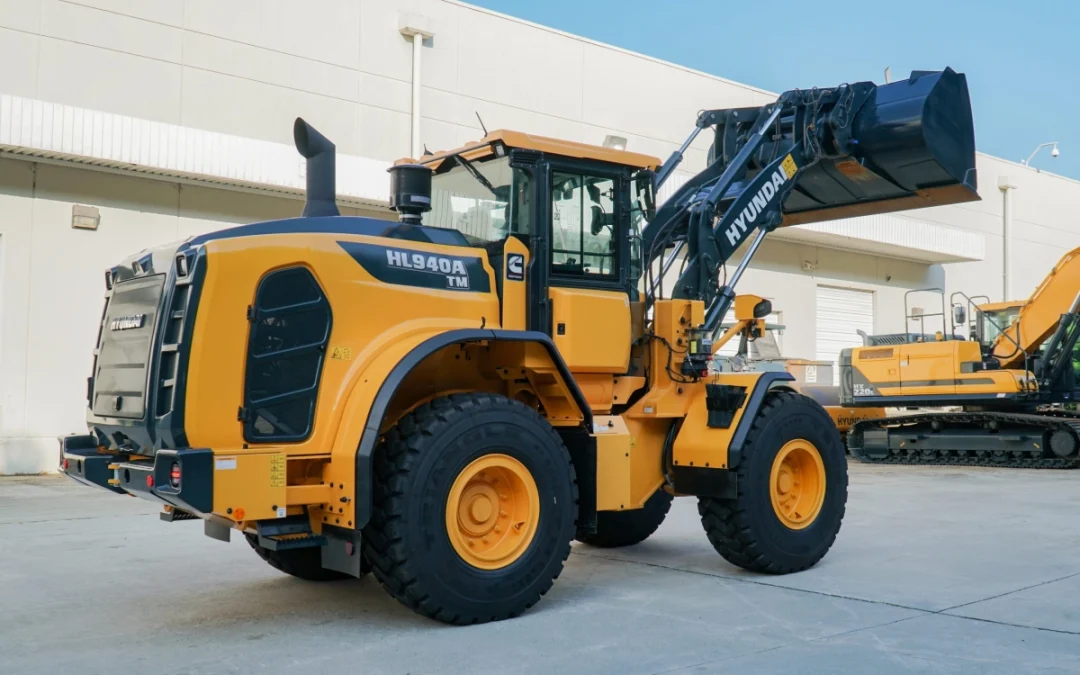
Hyundai Equipment Storage Guide: How to Protect Excavators, Wheel Loaders & Heavy Equipment During Downtime
Storing Hyundai construction equipment properly protects batteries, hydraulic cylinders, coolant systems, tires, pins, bushings, paint, interiors, and resale value. Whether your machine is parked for a few days, several weeks, or multiple months, the way it is stored can determine whether it starts cleanly when the job begins again — or comes back with corrosion, dead batteries, flat-spotted tires, leaking seals, stale fuel, or preventable repair costs.
For contractors, municipalities, farms, gravel operations, oilfield support crews, snow removal companies, and heavy equipment owners in Lethbridge, Nisku, Pincher Creek, Taber, Coaldale, Fort Macleod, Strathmore, Medicine Hat, Calgary, Edmonton, and across Alberta, proper Hyundai equipment storage is not just a maintenance detail. It is downtime prevention.
This guide summarizes key storage practices from Hyundai Construction Equipment’s official storage management guidance and turns them into a practical checklist for Alberta owners and fleet managers.
Why Hyundai Equipment Storage Matters in Alberta
Alberta equipment does not sit in easy conditions. Machines may be parked through freezing temperatures, wind, dust, snow, rain, freeze-thaw cycles, road salt, mud, and long idle periods between projects. That is hard on batteries, exposed cylinder rods, hydraulic fittings, engine compartments, coolant systems, rubber parts, cab interiors, and undercarriages.
Hyundai’s storage guidance is clear: machines may need to be stored for days or months, and proper storage helps prevent scratches, rust, dents, dirt accumulation, and battery discharge. That is the practical goal — keep the machine ready so it can return to work faster when it is sold, delivered, or needed back on the job.
If a Hyundai excavator, wheel loader, compact machine, or material handler is going to sit, treat storage as maintenance — not as parking.
Quick Hyundai Equipment Storage Checklist
Use this checklist before parking Hyundai equipment for more than a short period:
- Park the machine on firm, level, well-drained ground.
- Lower attachments to the ground.
- Place levers and switches in neutral.
- Retract hydraulic cylinder rods as much as possible.
- Apply grease or anti-corrosion protection to exposed cylinder rods and rust-prone areas.
- Turn the start key and master switch off.
- Disconnect or maintain the battery as required.
- Keep battery charge above 80% where applicable.
- Confirm coolant protection for the lowest expected temperature.
- Fill the fuel tank to reduce moisture formation.
- Grease attachment pins, bushings, and major pivot points.
- Close doors and windows to protect the cab from rain, dust, and moisture.
- Record storage date, location, model, serial number, and inspection history.
This list is not a replacement for the operator’s manual or model-specific service requirements. It is a practical starting point for Hyundai equipment owners who want to avoid obvious storage-related failures.
1. Park Hyundai Equipment on Firm, Level, Well-Drained Ground
The first storage decision is location. Hyundai recommends keeping the machine on well-drained, firm, level ground. That reduces the risk of sinking, leaning, tire deformation, track issues, water pooling, corrosion, and unsafe restart conditions.
For Alberta yards, avoid parking equipment in low areas where snowmelt, spring runoff, mud, or standing water can collect around tires, tracks, axles, undercarriage components, buckets, or attachments.
Before leaving the machine, lower the attachment to the ground and return levers or switches to neutral. This helps reduce unnecessary stress on hydraulic systems and improves safety around stored equipment.
2. Protect Hydraulic Cylinder Rods from Rust
Exposed hydraulic cylinder rods are one of the biggest storage risks. If polished cylinder rods sit exposed to air, moisture, dust, and temperature swings, corrosion can develop. Once a rod is damaged, seals can fail and hydraulic leaks can follow.
Hyundai’s storage guidance recommends retracting cylinder rods fully into the hydraulic cylinders where possible. Any exposed portions should be protected with anti-corrosion lubricant or grease, especially on machines stored outside or in harsh environments.
Pay close attention to:
- Boom cylinders
- Arm cylinders
- Bucket cylinders
- Loader lift cylinders
- Steering cylinders
- Exposed machined surfaces
- Rust-prone pins, fittings, clamps, and hardware
For machines parked through Alberta winter, spring thaw, or long outdoor storage, cylinder rod protection should not be skipped. It is cheaper to prevent corrosion than to replace seals, rods, or hydraulic components later.
3. Manage the Battery Before It Fails
Battery failure is one of the most common storage problems. Hyundai’s storage guidance recommends turning the start key and master switch off, removing the battery connection cable when required, and keeping the battery charged above 80%.
A fully discharged battery loses life. If the machine sits long enough, a weak battery can become a no-start problem, especially in cold Alberta weather.
Before long storage, check:
- Battery voltage
- Terminal condition
- Cable condition
- Master switch position
- Parasitic electrical draw
- Charging plan for long-term storage
For machines stored longer than several months, battery maintenance charging or battery removal may be required. If your Hyundai machine is already hard to start, do not treat that as normal storage behaviour. Have Chinook Equipment inspect the battery, charging system, cables, and related components before the machine is needed again.
4. Check Coolant Protection Before Freezing Weather
Coolant protection is critical before storing Hyundai equipment in cold weather. Hyundai’s guide specifies a normal coolant mix of 50% ethylene glycol base antifreeze and 50% water. Where the lowest ambient temperature is below -20°C, the guide calls for a 60% ethylene glycol base antifreeze and 40% water mixture.
In Alberta, below -20°C is not unusual. That means coolant condition should be checked before winter storage, not after the first deep freeze.
| Storage Condition | Coolant Guidance | Why It Matters |
|---|---|---|
| Normal temperature | 50% ethylene glycol base antifreeze / 50% water | General freeze and corrosion protection. |
| Below -20°C | 60% ethylene glycol base antifreeze / 40% water | Better protection for severe cold storage conditions. |
Also check coolant level and inspect for leaks. Low coolant, weak antifreeze concentration, or an unnoticed leak can turn storage into a repair bill.
5. Fill the Fuel Tank Before Storage
Hyundai recommends filling the fuel tank fully before storage. The reason is simple: an empty or partly empty tank leaves more air space where moisture can form. Water in fuel can contribute to injection problems, poor running, filter issues, corrosion, and downtime.
This is especially important for machines that sit through major temperature swings. Warm days, cold nights, and freeze-thaw cycles can create condensation risk. Before long storage, fill the tank and inspect fuel caps, breathers, filters, and water separators as part of the storage routine.
6. Grease Pins, Bushings, Attachments, and Pivot Points
Grease is not just for machines that are working every day. Stored machines also need lubrication protection. Hyundai’s guide calls for greasing attachment pins fully and identifies key lubrication points on excavators and wheel loaders, including boom cylinder pins, arm and bucket connection points, steering cylinder rods, center pivot pins, bellcrank points, bucket link pins, and related loader linkage areas.
Before storage, grease the machine properly so pins and bushings are protected while it sits. This is especially important for:
- Hyundai excavators
- Hyundai wheel loaders
- Machines with buckets, forks, grapples, blades, or snow attachments
- Machines parked outside
- Machines stored through winter
- Machines stored in dusty, muddy, or high-moisture yards
If grease fittings are damaged, blocked, missing, or not accepting grease, have them repaired before the machine sits. A dry pin or bushing does not improve while parked.
Monthly Hyundai Equipment Storage Checks
Hyundai’s storage guidance recommends periodic checks for long-stored machines, with inspection intervals shortened as needed depending on climate, environment, and storage location. For machines stored for one month or longer, the guide identifies three key monthly actions:
- Start and warm up the machine: Run the engine for about 15 minutes to help maintain battery charge and operating readiness.
- Operate working equipment: Travel, turn, and operate work equipment to circulate lubrication through functional components.
- Apply lubrication protection: Reapply anti-corrosion lubricant to exposed cylinder rods and rust-prone areas.
Also check engine oil level, coolant level, warning lights, visible leaks, unusual noises, and obvious damage. If something looks wrong, deal with it while the machine is parked — not on the morning it is needed for a job.
Every 90 Days: Do a Deeper Storage Inspection
For machines stored for longer periods, Hyundai’s guide calls for a more complete inspection every three months, with results recorded and kept with the stored machine. This is a practical fleet-management habit: if nobody records the condition, nobody really knows the condition.
Every 90 days, inspect:
- Battery voltage and charge level
- Engine oil level
- Coolant level
- Hydraulic oil level
- Transmission, axle, brake, steering, and other applicable fluids
- Leaks from hydraulic, power train, and cooling systems
- Rust on hose fittings, pins, bolts, clamps, and machined areas
- Cylinder rods for damage or corrosion
- Cab condition, seat condition, controls, windows, doors, mats, covers, and hatches
- Work lights, warning lights, lamps, gauges, and cluster operation
- Air conditioning and heater operation
- Tire pressure on wheel machines
- Track condition and undercarriage condition on tracked machines
If the machine has been stored longer than six months, Hyundai’s guidance identifies additional maintenance needs, including oil changes for applicable systems such as engine oil, travel and swing reduction gear oil, axle oil, transmission oil, brake oil, and related fluids depending on the machine type.
Hyundai Wheel Loader Storage Tips
For Hyundai wheel loaders, storage checks should pay special attention to tires, articulation points, steering cylinders, loader linkage, hydraulic oil, axle oil, transmission oil, brake system condition, and bucket or attachment pins.
If a wheel loader sits too long in one position, tires can develop flat spots. Hyundai’s guide notes that tire pressure may need to be kept higher during long-term storage and then returned to the correct specification during PDI or before delivery. The machine should also be moved periodically to change the grounded tire position.
For Alberta storage, wheel loaders parked outside should also be checked for snow accumulation, frozen mud around tires, salt exposure, battery condition, and moisture in electrical connections.
Hyundai Excavator Storage Tips
For Hyundai excavators, protect boom, arm, and bucket cylinder rods, grease all working equipment pins, inspect the undercarriage, and operate the machine periodically to circulate lubrication through travel, swing, and hydraulic systems.
Before long storage, park the excavator on firm, level ground with the attachment lowered. Keep exposed cylinder rod area minimized where possible and protect any exposed polished surfaces from corrosion.
For tracked machines stored in Alberta yards, inspect around the tracks for frozen debris, mud packing, roller leakage, idler leakage, track tension issues, and undercarriage damage before returning the machine to work.
Do Not Skip PDI After Long-Term Storage
A machine that has been sitting still needs a proper inspection before it is delivered, sold, rented, or put back into service. Hyundai’s PDI guidance calls for inspection by a qualified inspector, use of a documented PDI check sheet, machine washing and drying before inspection where appropriate, and review of exterior, interior, function, and engine room condition.
A good PDI process should check:
- Engine oil and coolant levels
- Hydraulic oil level
- Axle and transmission oil on wheel machines
- Engine operation
- Pre-heater operation
- Cluster, gauges, hour meter, lamps, horn, wiper, and electrical systems
- Air conditioning and heater operation
- Exterior damage, decals, paint, handrails, mirrors, and panels
- Cylinder rod damage
- Tire damage and air pressure on wheel machines
- Boom, arm, bucket, swing, travel, brake, and steering operation
- Lubrication points, joint connections, bell crank pivots, and steering connections
- Undercarriage, roller leakage, idler leakage, and track tension where applicable
- Oil leakage from engine, transmission, axles, travel motors, swing motors, valves, and attachments
This matters for owners too. If your Hyundai machine has been parked for a season, treat the return-to-work process like a mini-PDI. It can catch problems before they become downtime.
Common Storage Mistakes That Cost Money
Most storage problems are preventable. The expensive ones usually come from assuming the machine will be fine because it was running when parked.
| Mistake | What Can Happen | Better Approach |
|---|---|---|
| Parking with cylinder rods exposed | Rust, seal damage, hydraulic leaks | Retract rods where possible and protect exposed surfaces. |
| Leaving the battery unmanaged | Discharge, no-start, shortened battery life | Turn master switch off, check voltage, charge as needed. |
| Ignoring coolant strength | Freeze damage, overheating risk, corrosion | Check coolant concentration before winter storage. |
| Leaving fuel tank partly empty | Moisture accumulation and fuel system issues | Fill fuel tank before storage. |
| Skipping grease | Dry pins, bushing wear, corrosion | Grease attachment pins and pivot points before storage. |
| No monthly checks | Hidden leaks, dead batteries, seized components | Start, warm up, move functions, inspect, and document. |
| No inspection before return to work | Breakdowns on the job | Perform a storage exit inspection or book service. |
When to Call Chinook Equipment for Hyundai Storage Service
Call Chinook Equipment before or after storage if you notice:
- Slow cranking or no-start condition
- Battery warning or repeated discharge
- Coolant level dropping
- Hydraulic oil level dropping
- Visible leaks under the machine
- Rust on cylinder rods
- Damaged hoses or fittings
- Dry, seized, or noisy pins and bushings
- Flat-spotted or low tires
- Track tension issues
- Warning lights or cluster faults
- Air conditioning or heater not operating
- Machine has been stored longer than six months
Chinook Equipment supports Hyundai Construction Equipment owners with trained technicians, OEM parts, fast parts ordering, service support, and Alberta locations in Lethbridge, Nisku, and Pincher Creek.
Hyundai Equipment Storage Supplies to Keep on Hand
For owners managing their own storage program, keep the right maintenance supplies available before the machine is parked:
- Hyundai-approved filters
- Engine oil
- Hydraulic oil
- Coolant / antifreeze
- Grease
- Battery charger or maintainer
- Fuel filters and water separator elements
- Replacement grease fittings
- Hydraulic couplers and caps
- Cleaning supplies for radiator, coolers, cab, and engine compartment
- Protective lubricant for exposed metal and cylinder rods
If you are not sure which filters, fluids, or parts your Hyundai machine needs, contact Chinook Equipment with the model and serial number. Guessing on heavy equipment fluids and filters is a poor way to save money.
Alberta Hyundai Equipment Storage: Practical Seasonal Plan
Use this simple seasonal plan if your Hyundai machine will sit between jobs:
| Timing | What to Do | Why |
|---|---|---|
| Before storage | Clean machine, park on firm level ground, fill fuel, check coolant, grease pins, protect cylinder rods, manage battery. | Prevents common storage damage before it starts. |
| Every month | Start and warm up, operate functions, inspect leaks, reapply protection, check fluids. | Keeps systems moving and catches early problems. |
| Every 90 days | Record battery voltage, fluid levels, exterior condition, interior condition, leaks, tires or tracks, and functional checks. | Creates accountability and prevents forgotten-machine problems. |
| After 6 months | Plan deeper inspection and fluid service where required. | Long storage increases risk of contamination, corrosion, and degraded fluids. |
| Before return to work | Perform a return-to-service inspection or book Chinook Equipment service. | Reduces risk of failure on the first job back. |
Bottom Line: Stored Hyundai Equipment Still Needs Maintenance
A Hyundai excavator, wheel loader, or heavy equipment unit does not stop aging just because it is parked. Batteries discharge. Cylinder rods rust. Coolant protection changes. Tires can flat spot. Grease can dry out or wash away. Moisture can affect fuel, electrical connections, interiors, and exposed metal.
The fix is straightforward: store the machine properly, inspect it on a schedule, record what was checked, and deal with problems before the machine is needed. For Alberta owners, that is the difference between a machine that is ready for work and a machine that creates downtime at the worst possible time.
If your Hyundai equipment has been sitting, is going into seasonal storage, or needs parts before returning to work, contact Chinook Equipment. Our team can help with Hyundai parts, service, inspections, maintenance planning, and storage-related repairs.
Frequently Asked Questions About Hyundai Equipment Storage
How should I store a Hyundai excavator?
Park it on firm, level, well-drained ground, lower the attachment, place controls in neutral, retract cylinder rods where possible, protect exposed rods with anti-corrosion lubricant, maintain the battery, fill the fuel tank, check coolant protection, grease pins, and inspect it monthly while stored.
How should I store a Hyundai wheel loader?
Park the wheel loader on level, well-drained ground, lower the bucket or attachment, check tires, grease loader linkage and pivot points, protect exposed cylinder rods, maintain the battery, check coolant strength, fill the fuel tank, and move the machine periodically during long-term storage.
How often should stored Hyundai equipment be started?
Hyundai’s storage guidance identifies a monthly check that includes starting and warming up the machine for about 15 minutes, operating working equipment, and applying lubrication protection to exposed cylinder rods and rust-prone areas.
Should I disconnect the battery during storage?
Battery management is important during storage. Hyundai’s guidance calls for turning the start key and master switch off, removing the battery connection cable when required, and keeping the battery charge above 80%. For longer storage, battery maintenance charging may be needed.
What coolant mix should Hyundai equipment use in Alberta winter storage?
Hyundai’s guide lists a 50/50 ethylene glycol antifreeze and water mixture for normal temperatures. Where the lowest ambient temperature is below -20°C, it lists 60% ethylene glycol base antifreeze and 40% water. Always confirm requirements for your exact machine and operating conditions.
Why fill the fuel tank before storing heavy equipment?
A fuller fuel tank reduces air space where moisture can form. Hyundai’s guide warns that moisture in the fuel tank can lead to water in fuel, which can contribute to injection problems.
Where can I get Hyundai construction equipment parts in Alberta?
Chinook Equipment supports Hyundai Construction Equipment parts and service through its Alberta locations, including Lethbridge, Nisku, and Pincher Creek. Contact Chinook Equipment with your machine model and serial number for parts support.
Can Chinook Equipment service Hyundai machines after storage?
Yes. Chinook Equipment supports Hyundai machines with trained technicians, parts support, preventative maintenance, emergency repairs, and service trucks. Book service before returning a long-stored machine to work if you see leaks, battery issues, warning lights, rust, fluid concerns, or starting problems.